Showing posts with label New York. Show all posts

Thursday, June 6, 2024

What Happens to Trust in the Age of AI?

I attended an interesting seminar at the residence of the Swedish Consul General in New York (Camilla Mellander) this past Tuesday. It was part of the consulate’s Transformative Talks series, and the topic of the night was The Future of Trust in the Age of AI. 

Kimberly Springer, curator at Columbia University moderated a discussion with Swedish panelists Martin Gelin (journalist and author) and Martin Adolfsson (artist and photographer) – both based in New York. The discussion was lively and there were many questions from the audience reflecting both a curiosity and a healthy skepsis about the impact of the explosive growth of AI in the aftermath of the 2022 launch of ChatGPT 4.0 based on Large Language Models (LLMs). 

What happens to trust when we seem to be surrounded by an ever-growing stream of manipulated stories and enhanced or fake images? What and who can we trust? Is more regulation the answer, or even feasible? Is media education the answer? Will the emerging AI-world self-regulate in the interest of the common good? Big questions, which nobody knows the answer to today. But it's not only a matter of what the AI-researchers and companies do. 

The deeper question is how we as human beings react in this new environment. Will we cynically take a huge step back and seek comfort in tribalism and conspiracy theories? Will we find a way to navigate a world where confusion grows despite the explosion of facts and theories? 

I put together a couple of links to articles that provide a background to those and other questions.

Why Facts Don’t Change Our Minds - New discoveries about the human mind show the limitations of reason. By Elizabeth Kolbert

Don’t Believe What They’re Telling You About Misinformation. By Minvar Singh

The Fake Fake-News Problem and the Truth About Misinformation. By Minvar Singh

Thoughts on “The Enigma of Reason”.  By Arthur Juliani

The cerebral mystique. By Arthur Jasanoff

Will A.I. Be a Creator or a Destroyer of Worlds? By Thomas B. Edsall

Monday, March 9, 2015

New York's Mayor Bill de Blasio Spoke at the March 6th Memorial for Deborah Darrell


Deborah Darrell was a dear friend who suddenly passed away this past December. My wife Lisa became friends with Deb soon after becoming U.S. Press Director for H&M back in 2004.

Deborah Darrell in 2009.
I had actually first met Deb several years before, at a party back in the 1990s when she was working for the U.S. Foreign Press Center, but it was after she became Lisa's friend and mentor that I really got to know her. We often met at Niles Bar across the street from Penn Station to discuss business ideas, since we were thinking of starting a consulting agency together. (Lisa would collaborate with Deb in her agency Cue several years later.)

It was always fun to meet with Deb as she had this ability to make everything sound possible and just around the corner. Which in a way made her a soul mate of Barack Obama, whom we heard speaking at Coopers Union in New York on March 27, 2008.

Bill de Blasio and guests at a fundraiser
Deborah Darrell held in her home in 2009.
Deb would campaign for Obama in 2008, holding fund raisers and knocking on doors, doing what she could to help him win.

In April 2009, she invited us to a fundraiser for Bill de Blasio in her new apartment on 110th street, which overlooked the northern edge of Central Park. We were not sure about who he was then as he was fairly unknown and running for Public Advocate in New York.

But we trusted Deb and we drove in to Manhattan from our home in the Princeton area. It was a great party and a nice mix of people. Bill de Blasio had his entire family with him. I remember Bill not only because he was so tall, but because of his intensity and for exuding honesty and uprightness. He was unabashedly progressive and spoke with clarity and force.

And he would win the election for the job as Public Advocate. Three years later he would become Mayor of New York City in a landslide election. I don't know if Deb or anybody else had any idea back then, but one thing I know and that is that she did her part in helping him move forward.

Lisa remembering Deborah Darrell.
Hence it was fitting that Bill de Blasio and his wife Chirlane McCray showed up at the memorial for Deborah at the Snapple Theatre in New York this past Friday. They arrived up a bit late, which according to Deb's and Bill's friend Monsignor Kevin Sullivan is his habit, so he missed both Sullivan's, Bethann Harding's, my wife Lisa's and Benita Gold's reflections on their respective friendships with Deb.

The ceremony continued with Carol Levin singing "They Can't Take That Away From Me" accompanied by Nick Moran on guitar. Then Bill and Chirlane entered the stage.

I captured their reflections with my cellphone camera, so be patient if it gets a bit shaky now and then.

Friday, October 11, 2013

Bill de Blasio on "Up Late With Alec Baldwin"

Bill de Blasio a couple of years back when he was running
for Public Advocate. Photo: Hans Sandberg
MSNBC launched Alec Baldwin's new show, which featured Bill de Blasio. Both men impressed. Alec for doing an extremely smart interview, which is part Charlie Rose and part Oprah Winfrey. Brain and emotion intertwined in a relaxed and charming embrace. And Bill de Blasio is a master communicator. He comes out as an extremely sensitive, intelligent and honest man, radical, but not extreme. I only met de Blasio once, but he made a very strong impression. He is a truly good person. And he is about to become mayor of the Big Apple. A good thought in these dark days when morons like Ted Cruz has been allowed to bring the world to the brink of economic collapse.

More on New York's Next Mayor

Bill de Blasio Rules .... Soon.

Elites Shiver, But Progressives Are Elated at Bill de Blasio's Primary Win

New Yorker columnist on Bill de Blasio: “Let’s give him a shot.”

Nervous Elites Await the Arrival of the Anti-Bloomberg

Does Bill de Blasio's Rise Foreshadow a Progressive Turn in U.S. Politics?

Before Bill de Blasio Was the Hottest Democrat in New York - At a 2009 Fund Raiser


Wednesday, September 18, 2013

Bill de Blasio Rules .... Soon.

The Mayor who came in from nowhere... this story is getting better and better!

"Mr. de Blasio, whose last remaining rival for the Democratic nomination conceded this week, enjoys support from 65 percent of likely voters, compared with 22 percent who back Mr. Lhota, according to a WNBC/Wall Street Journal/Marist poll released on Tuesday." 
De Blasio Has Huge Lead Over Lhota, Poll Finds  (New York Times) 

Friday, September 13, 2013

Elites Shiver, But Progressives Are Elated at Bill de Blasio's Primary Win

With Obama's hope wilting like last weeks roses, progressives are seeking solace in Bill de Blasio's victory in the New York City's democratic primary. Paul Krugman writes in today's New York Times:

Take, for example, the proposal by Bill de Blasio, who finished in first place in Tuesday’s Democratic primary and is the probable next mayor of New York, to provide universal prekindergarten education, paid for with a small tax surcharge on those with incomes over $500,000. The usual suspects are, of course, screaming and talking about their hurt feelings; they’ve been doing a lot of that these past few years, even while making out like bandits. But surely this is exactly the sort of thing we should be doing: Taxing the ever-richer rich, at least a bit, to expand opportunity for the children of the less fortunate. Some pundits are already suggesting that Mr. de Blasio’s unexpected rise is the leading edge of a new economic populism that will shake up our whole political system. That seems premature, but I hope they’re right. For extreme inequality is still on the rise — and it’s poisoning our society.
Peter Beinhardt sees the victory as the expression of a new generational shift to the left in The Rise of the New New Left, a long and very interesting essay for the Daily Beast.
The deeper you look, the stronger the evidence that de Blasio’s victory is an omen of what may become the defining story of America’s next political era: the challenge, to both parties, from the left.


The deeper you look, the stronger the evidence that de Blasio’s victory is an omen of what may become the defining story of America’s next political era: the challenge, to both parties, from the left. - See more at: http://www.thedailybeast.com/articles/2013/09/12/the-rise-of-the-new-new-left.html#sthash.8AhRQzJP.dpuf

Wednesday, September 11, 2013

New Yorker columnist on Bill de Blasio: “Let’s give him a shot.”

The New Yorkers' John Cassidy on why he voted for Bill de Blasio.


Bill de Blasio back in 2009. Copyright: Hans Sandberg
There’s no doubt that electing de Blasio, who doesn’t have much executive experience, would be a progressive experiment based upon optimism and, to some extent, suspension of disbelief. As a recovering realist, that’s the mindset I’m adopting. New Yorkers, after years of watching their city being transformed by aggressive policing, changes in migration patterns, and corporate-friendly development policies, can afford to push back a bit. De Blasio is hardly another LaGuardia, but he has presented a vision of the city as a vibrant, multi-racial place, with progressive values and a bit less inequality. Pulling the lever today, I said to myself, “Let’s give him a shot.” If it doesn’t work out, we can always switch to Thompson or Quinn or somebody else in four years, or even call Bloomberg out of retirement.

Nervous Elites Await the Arrival of the Anti-Bloomberg

Bill de Blasio is in many ways the opposite of New York's billionaire mayor Michael Bloomberg, who has done a lot of good for New York, but has been aloof when it comes to social issues and the rising inequality.
Mr. de Blasio, a white Brooklynite who frequently showcased his biracial family, built a broad coalition of support among nearly every category of Democratic primary voters on Tuesday, according to the exit poll by Edison Research. His critique of a city divided between rich and poor — tried in the past by other candidates in New York and nationally with little success — resonated.
“I love his message about the tale of two cities, the big inequality gap,” said Jelani Wheeler, 19, a politics student at St. John’s University in Queens.
“We can start correcting many important issues the city is facing, issues often ignored by the Bloomberg administration,” he added. (De Blasio First in Mayoral Primary; Unclear if He Avoids a Runoff)
New York's financial, political and media elite seems very uncomfortable with Bill de Blasio, who in many ways is the anti-Bloomberg, the anti-establishment candidate. Here is another clip from today's NYT: 
They are startled and unsure how to react. “Terrifying,” is how one banker put it.
Many in New York’s business and financial elite, stung by the abrupt ascent of Bill de Blasio, an unapologetic tax-the-rich liberal, are fixated on a single question: What are we going to do?
The angst, emanating from charity galas and Park Avenue dinner tables, has created an unexpected political opening for Joseph J. Lhota, the Republican nominee, whose once-sleepy candidacy is now viewed by players in both parties as their last, best hope for salvaging the business-friendly government of the Bloomberg era.
Even before his victory speech on Tuesday night, Mr. Lhota was moving quickly to exploit his newfound role. He planned to speak on primary night with Mayor Michael R. Bloomberg, whose blessing could confer credibility with the Manhattan establishment. (Lhota Hopes to Capitalize on Elite Dismay Over a Liberal Tilt)

Saturday, September 7, 2013

Does Bill de Blasio's Rise Foreshadow a Progressive Turn in U.S. Politics?

Bill de Blasio has upstaged the democratic primary in New York City, and it now looks like he will be the democratic candidate.

What six months ago looked like the longest of long shots suddenly looks plausible. Can a Progressive Make It to Gracie Mansion? Matt Taylor, a Brooklyn-based writer asks in the latest issue The American Prospect:


Bill de Blasio running for New York City
Public Advocate in 2009. Photo: Hans Sandberg
"A self-styled movement progressive with a biracial family from Park Slope, Brooklyn, de Blasio has seized the mantle of change in a city where many residents appear to crave it after a decade under billionaire incumbent Michael Bloomberg’s cold vision of financial capitalist technocracy. With just a few days left before the September 10 Democratic primary, de Blasio is way out in front of his rivals; in the latest Quinnipiac poll, he crossed the 40 percent threshold needed to avoid a run-off and advance directly to the November general election."
Mayor Bloomberg has been a strong leader and pushed Health and Green issues, but he has not touched the Power and wealth he shares with his fellow plutocrats.
"His signature campaign pledge is to raise taxes on those earning more than $500,000 annually to fund universal pre-K and expanded after-school programs for middle schoolers, which the latest research suggests is one of the best ways to reduce income stratification."
What happens if de Blasio wins the primary and then really becomes the mayor of New York City? If he fails in that job, he will be seen as an anomaly, a nice guy who couldn't deliver. But if he succeeds?
"De Blasio, then, represents the inevitable turn leftward in a city where Democrats outnumber Republicans six to one—and where the new candidate of hope and change is charged with the task of making up for the shortcomings of the old one," Taylor concludes.

Also read: Eric Alterman's take on de Blasio in The Nation magazine:

Bill de Blasio and the Rebirth of Economic Liberalism

Wednesday, August 21, 2013

Before Bill de Blasio Was the Hottest Democrat in New York - At a 2009 Fund Raiser

Bill de Blasio is currently the hottest name in the Democratic primary in New York. Will he take over after Mayor Blomberg? Lisa and I met with Bill at a fundraiser when he was running for the office of the Public Advocate back in 2009. The event was held at the home of our friend, the PR Consultant Deborah Darrell. Below are snapshots from the event. He is a really nice and genuine guy. Smart and progressive too. Maureen Dowd wrote about him today in her column Bill’s Turn at Bat.


Copyright: Hans Sandberg


Sunday, October 10, 2010

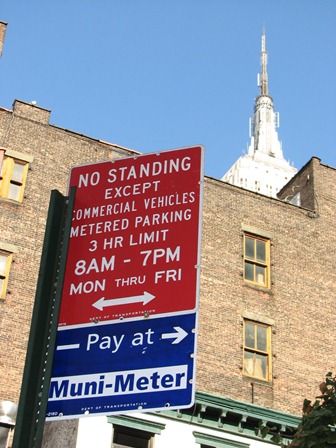
The Hidden Skyscraper - Empire State Building

They are mighty, but often hard to see from the street level.


Thursday, May 13, 2010

Microsoft Pushes A Smooth Envelope With Office 2010

I've been using Office for at least ten years, but I'm not a loyalist. I could as well use OpenOffice, which is an excellent suite, and a free one at that. Today I went to Microsoft's press event for Office 2010, which was held at the same NBC-studio at Rockefeller Center where Saturday Night Live is filmed, but the event was despite this rather dull and predictable with an delayed opening, where we were treated to PowerPoint slides telling us among other things that people in 60 countries were watching today's event, which must have made the delay exponentially more embarrassing.

Stephen Elop, president of Microsoft's Business Division (left photo), was a fresh face - he joined Microsoft in January 2008 - but he did okay. Not exactly a Steve Jobs-show, but this was after all a press conference about office productivity. Once the rather predictable customer interviews and even more predictable videos were played, things got interesting.

Chris Capossela, senior vice president of Microsoft's Information Worker Product Management Group, did a very convincing demo of Office 2010, and brought out its many innovations and its integration across platforms, showing how you or a team can work with a document on your PC, laptop and smartphone at the same time, and for example broadcast a PowerPoint slide show from your desktop PC to other people's browsers or cellphones.

I came back from the event with a similar first impression as I had when I returned from the Windows 7 launch in October. Microsoft seems to finally have figured it out. Here is elegance, ease-of-use, really intelligent applications and smart integration, and not much of the annoying interference with our work we learned to hate with Vista.

Hans Sandberg

Note: Microsoft did not allow any photography at the event, so I had had to rely on the company for these two photos.
Disclosure: Microsoft handed out a free copy of Office Professional 2010 to participants in the press conference.

Monday, June 1, 2009

The 2009 Childhood Soccer Tournament

Childhood USA and Blatte United invited young kids from New York to a day of soccer, food, ice cream and fun at the Met Oval Foundation Soccer Field in Queens, one of New York's oldest.

Marcus Samuelsson and two young New Yorkers. 

Charlotte Brandin, Childhood USA, 
and Selim Adira, Blatte United Football Club.

About 50 kids from Bronx, Brooklyn, Harlem and Queens got a chance to play soccer in the sun on Sunday, May 31st. Among the teacher were Swedish-born amateur soccer players,  including New York's famous chef, Marcus Samuelsson, and hedge fund manager Medufia "Keke" Kulego.   

-It a chance for us to highlight what childhood is about, says Charlotte Brandin, Executive Director for Childhood USA, the U.S. section of World Childhood Foundation. We hope to repeat the tournament next year, she adds. 

-It's fun to combine multiculturalism with soccer and to do it here in Queens. It's a great theme for our cooperation with Childhood USA, and a lot of fun to teach kids play soccer, Marcus Samuelsson says in break between two games.  

-We always have tournaments for adults, but we always wanted to do something for the children, says Selim Adira, whoese parents immigrated to Sweden from Marocco. He moved to New York four years ago and runs the residence for the Swedish U.S. Ambassador.  

"The 2009 Childhood Soccer Tournament" was arranged with support from Volvo Group North America and AQ Kafé. Childhood USA hopes that the soccer event will benefit its five charity partners in New York: Family Advocacy Program in Bronx, Northside Center for Child Development in Harlem; Safe Space Drop-In Center in Far-Rockaway i Queens, Chances for Children in Bronx and Inwood House in Manhattan.

-It's a fantastic thing, and the staff is doing such a wonderful job. They are really dedicated to help the children, says Maria Williams, a Queens resident whose four year old daughter join the games with gusto despite never having played soccer before. 

A four year old soccer enthusiast from Queens.

 Portia from Bronx with her youngest 
daughter, five-year old Navaia.  

-They told me about the program at the Family Advocacy Program in the Bronx. I thought it was fun. I used to play on a soccer team when I was younger, and I wanted my three daughters to get the experience, says Portia, a mother of three.

-Soccer is fun, and hard, says her oldest daughter Destiny, who is eight. She adds that the hard part is to get the ball in the net. I want to join the Bronx Rangers, she says.

-I like soccer. It was fun, and I like to run. And I made a goal, says her sister, seven-year old Jamaia.  

Terrence Johnson, a teacher at Middle School 399
in Bronx some of his eleven students 
who attended the soccer event.

-It’s a good event, because we are from Bronx, and soccer is not a game that a lot of kids get to play. They were excited to get to do something you normally don’t get to do, says Terrence Johnson, a middle school teacher from Bronx. 

Met Oval Soccer Field with Manhattan's
skyline in the background.

Marcus Samuelson teaches soccer. 

Kick off!

Ready for the game! Assistant Coach 
Mahir Ali Hossein and his team.


Marcus Samuelson instructing his soccer students. 

A student training with the Swedish hedge fund
manager and Medufia "Keke" Kulego.

Charlotte Brandin, Childhood USA and 
Christina Moliteus, SWEA and board 
member at Childhood USA.

Text & Photo: Hans Sandberg   Copyright: Hans Sandberg

Tuesday, October 4, 2005

Trollbäck: Street-Smart Swede Takes Fifth

(From Currents' Fall 2005 issue)

Jakob Trollbäck comes off as the stereotypical humble shy Swede, but don’t believe it. He is actually one of the hotter creative names in U.S. advertising, and all you need to do feel his impact, is to flag down a Manhattan taxicab. Chances are good that the sign on top will read ”Getaway car.” And if you head for the bus, a sign on the side might read: ”Witness Relocation,” while the sign on the bus that you can’t get around reads ”Roadblock.” These subliminal signs, which hint at an unseen world of excitement, are part of a multimillion campaign for Court TV produced by Trollbäck + Company.


Jakob Trollbäck came to New York pretty much empty handed, well not quite as he did carry his “book,” when he did his rounds, looking for a job in the big city. He didn’t have much in terms formal education in the trade, but he was - among other things - a pretty good disc jockey, and he had taught himself how to do graphics design on a Macintosh, which in December 1991 was not as common a skill as it is today.

Why New York? He went there as a tourist in 1987 and was struck by the creative environment, and the “can do” attitude. Back home in Stockholm, he had found it impossible to the foot in the door, as the first question would always be about his education in the trade. “Things have changed since then. This was fifteen years ago,” he reminds us.

In the Big Apple, he landed a job with Bob Greenberg’s agency R/Greenberg, a pioneer in using CAD (computer aided design) to make movies like “Alien” and "Superman.”
“I knew a freelancer that had worked for them and I knew that they worked with animation. Besides, I did know computers, which at that time was not as common as today,” he says. He worked there for seven years and became its creative director before leaving in 1999 to start his own company. The new company was set up with his and his wife’s money as the only investments. His first client was Leo Burnett, the Chicago based agency. “We started with motion graphics, and did a logo for Leo Burnett’s ad movies.”
Trollbäck + Company has also done work for HBO, TCM, Jaguar, Nike, Volvo, Target and Chevrolet.

About twenty people work at the main office on the fourteenth floor at the corner of Fifth Avenue and 31’s Street, two blocks south of the Empire State Building. The company recently opened a second office with five employees in Venice outside L.A.

The difference between Swedish and American TV is that the pressure is much higher to get people to stay with the channel, he says. That makes it essential to communicate brand attitude to the viewer, which is something Trollbäck + Company did when they redesigned the cable channel TNT, and later the American Movie Channel (AMC) and Court TV.

“Swedes are highly respected in the trade, he says, and suggests that their popularity has something to do with the Lutheran heritage, which favored the clean and simple message over the elaborate and ornamental. “When you come to New York, it is all cool stuff, but after a while you start to think about how to cut through the clutter,” he says mentioning keywords such as “clever,” “intelligent” and “truth.” “It’s about respecting people’s intelligence.” Part of the secret behind the success of Jakob Trollbäck could be that he approaches the country with a degree of skepticism. “Sometimes I feel like America is a land of teenagers, where there is little respect for wisdom.” What is it that Sweden brings to America in advertising? “In Swedish advertising you have to respect the customers. That is ABC. People say that they do it in America too, but advertising tend to be superficial and to talk down to people.” Another Swedish trait popular in the U.S. is its “dry” humor, like that sign on the phone booth saying “The Lookout,” or the umbrella over the hotdog-stand with “Undercover” on it.

Hans Sandberg

Don’t Forget Your Heritage, But Don’t Overplay It Either


Currents Fall issue 2005.

In Sweden, you can take chances without risking your job, argues Hans Ullmark, in a wide-ranging interview about Swedes and advertising, and how you communicate in the American market. Hans Ullmark is CEO of the San Francisco based advertising agency Collaborate. Back in the mid 1980’s he started up Anderson & Lembke in New York City together with Steve Trygg.


One would think that it would be hard to crack the advertising business for anybody but a true native. However, we have seen a bunch of Swedes making it over here. Why is this? Is it just a matter of highly talented people lured to the huge U.S. market, much like Swedish hockey stars dream of the national hockey league? Or do they bring anything else that helps them succeed in the U.S.? “I don’t know,” Hans Ullmark says, warning against hyperbole. “I have been here for 21 years and I have had agencies in Europe and in Sweden, and I have seen people coming over here, but some of them failed despite being very capable people. One was a professor of design in Sweden, and had an enormous talent, but it didn’t work out too well. And then there was Hall & Cederquist, whose New York office failed despite them being extremely good in Sweden and having a very good local manager,” he says.

“But Sweden has been very strong in advertising for at least forty years. Sweden is probably the European country that has won most international awards per capita. I’m not sure about what it is, but we do have a large degree of creative freedom. You are allowed to make mistakes, without having to fear for your job. Another thins thing is that our agencies are less hierarchical compared to the American ones. It is fairly egalitarian, which creates a leveled playing field for talents and ideas. Neither do we in Sweden believe in polling and testing every idea, which allows us to follow your our heart and mind. If it feels right, let’s go with it,” he says and adds. “We also worked with a rather refreshing humor, which may have been a bit raw, but not vulgar. People could relate to it.”

“When Swedish advertising professionals took their craft to the U.S., they quickly found themselves at home, with agencies that were willing to listen to their ideas, and clients who were ready to consider the ideas even if they at first sounded a bit wacky.”

Should I take it that the Swedish employment-security model nurtures creative talents, who then skip over to the U.S. to avoid the high income taxes? “Well, I can only speak for myself, and in my case it wasn’t the high taxes, but the dream of a larger playing field.”

Sweden is, despite its Lutheran heritage, deeply Americanized. You grow up entrenched by the American popular culture, and at the same time, while the French and Germans have the option of focusing on their home markets, ours is too small. “You are making a good point, and I believe that there is a lot to it. We Swedes find it easy to take in the American culture, and to figure out how to use it. I have just finished a branding workshop with 300 people from all over the world, where many had a hard time getting the message, despite the fact that they all speak English. It is as if they don’t really understand what I am saying. We never have that problem when we work with Swedes coming to the U.S. to work with marketing.”

At the same time, one could argue that the Swedish environment in many ways is hostile to advertising, with politicians trying to limit it and the average consumer being very skeptic against ads. Isn’t this a paradox? ”Yes it is, but all I know is that there are people who like to do the opposite thing, myself included. I grew up as a socialist, and took flak from my friends when I started in advertising. ‘How can you do this?’ they asked, but after a while they understood that I was not out to hurt society.”

Does being Swedish still affect your work after two decades in the U.S.? Does it help, or does it trip you up sometimes? “Steve Trygg and I may have been talking a little too much about Sweden when we came here twenty-one years ago, but we corrected that and defined ourselves as a global agency, coming out of Sweden. We sometimes used our history to help explain our thinking, while we ignored it if it was not relevant. But it never tripped me up, and if anything it was something positive,” he says.

“As for my new bureau agency Collaborate, the only thing Swedish about it is that we try to give people a little longer vacations, and that we want our staff to have a balance between life and work. We try to be more egalitarian and a little less hierarchical than an average American agency. This worked out really well at Anderson & Lembke.”

Growing up in Sweden, you become somewhat naïve, and not as cynical as a native New Yorker. When a Swede comes to New York, he jumps on the first train to Harlem. “Well, when I came to New York the first time, I walked a hundred blocks down from the Apollo Theatre in the middle of the night and dressed in a white suite. That was naïve, but nobody did anything to me. They just laughed,” says Hans Ullmark.

“Swedish and Scandinavian design was of tremendous help when we started Anderson & Lembke in the U.S. It was well known, and our American clients were impressed when they saw how we implemented it. It went home really well.”

“The Swedish way of communicating is conceptual and focuses on the idea. We often had to retrain our American designers, and teach them a new way of thinking, a cleaner and more striking graphic design.”

What are the biggest communication mistakes a Swedish company can do when it tries to reach the American market? “I have met with hundreds of European and Swedish companies over the years, and many are extremely naïve about how to pursue the American market, both large and small companies. The main problem is that they look at the U.S. as one single market, but it is very hard for any Swedish company to take on this huge continent. They don’t understand market segmentation very well. In Sweden, you can go from zero to being a leader in a fairly short time because it is a small market, but it is impossible to do that in the U.S. Even if you managed to do it in Europe, it is not going to work here,” he says.

“Another mistake is that they stress their Swedish origin too much, and talk way too much about Sweden. You can talk about Sweden when it is relevant, but you need to show that you are committed to this market and here to stay. People often fail to make this point.”

“You also need to have an American management. There can be Swedes too, but they have to play it in a way so that it feels like the company has an American leadership.”

So it is more a matter of substance, than the language itself? “Yes, right!”

“Swedes can also be naïve when it comes to money and investments. It will cost a lot of money to start a company here, whatever business you are in. Most companies have no clue about the cost. When Steve and I started in the U.S., we took out a meager salary, which was hardly enough to pay the mortgage on our houses in Connecticut. It was tough, but we prioritized to invest 100,000 dollars in marketing the company. We invested more in marketing than in our salaries. Few Swedes get this, as entrepreneurship is less risky in Sweden compared to in the U.S. We have no safety nets. You’re on your own.”

”It takes some time to figure these things out, but some companies do. They hire the right Americans and blend the best of their Swedish heritage with the best of the American corporate culture. I remember a piece of advice I got from Volvo in the beginning. They told me to always speak English, even if you are two Swedes sitting alone in a conference room. Other ways, people may assume that you are talking about them. Small things like that are important when you build a company in the U.S.”

Hans Sandberg(This interview was first published in Currents' Fall issue 2005.)
Tuesday, September 13, 2005

Americans Are Finally “Getting” Cheese

(First published in the Norwegian food retail newspaper Dagligvarehandelen in September 2005.) 

If you ask for American Cheese in an American supermarket, chances are that you will be offered a small square block of an industrially processed product that is pre-sliced and individually wrapped, but has little if any taste. But the American cheese landscape is changing, and could follow the path towards sophistication, similar to what happened to the country's coffee and wine culture over the past few decades. 

“We are serving 160 wines by the glass and have over 200-250 cheeses,“ says Frank Bismuth, General Manager of Artisanal, a New York restaurant located on the 32nd Street close to Park Avenue.

Artisanal opened in 2001 and seats about 180 people. One of the most popular items on the menu is the cheese fondue, of course! Many customers, who come in for lunch or dinner, and smell the cheese, end up buying a piece of hand made and often pungent cheese from the cheese deli, which sits along one side of the restaurant.
“Cheese is becoming more popular, especially in New York City, which is very cosmopolitan and where people travel a lot,” says Frank Bismuth, who came to New York from Paris eleven years ago. “We find that people are very passionate about cheese," he says.

It is a bit of a paradox that cheese is gaining in popularity at the same time as health care experts and mass media warn of the obesity epidemic, but Frank Bismuth gives at least some of the credit for the current cheese craze to the Atkins diet, which allows its dieters to indulge in fatty foods, as long as they cut back on the carbohydrates. “You can enjoy your cheese without feeling guilty,” he adds. 
Artisanal carries cheeses from all over the world, from Spain, Italy and France, England and Scotland, just to name a few places of origin. “We also have a lot of great domestic cheeses, like those from Vermont and California,” he says. “And more and more restaurants are expanding their cheese selection,” he says. This growing cheese interest led to the opening of the Artisanal Premium Cheese Center in New York in 2003, which promotes and distributes artisan cheese, as well as gives classes to cheese lovers and aspiring cheese sellers alike. New York Times recently reported that many women are entering the cheese trade, and some even have taken up making artisan cheese. Over 1,700 people have taken classes at the center. The American Cheese Society, which is headquartered in Kentucky, has seen its membership double in four years and now counts about 1,000 members.

Good cheese is of course not new to New York City, but it seems that the taste for good non-industrial cheese is spreading beyond the ethnic enclaves of the big cities. Valdemar Albrecht is in charge of the cheeses at Artisanal. He is from Germany, but has lived in Barcelona, Spain and about ten years in the U.S. “Our focus here is to showcase artisan cheese making. All these cheeses are small batches. We both sell cheese to customers, but also prepare them for customers who want some cheese to their wine,” he says, adding “Almost everything you see here comes from the Artisanal Premium Cheese Center, but we have our own cave here where we stock our cheeses.” 
“Rouge River Blue is one of the most expensive domestic cheeses we have. We also have a classic French cheese called Roquefort. They sell for about 37 dollars per pound. This might sound like a lot, but these are cheeses made by artists, so I think they are prices accordingly.”
“I think that the attitude to cheese is changing the more we expose them to cheeses and educated about them. Luckily, we have an extremely savvy clientèle here in New York. They are world travelers, very well educated and they know the products that they want. But there is definitively a shift in the United States’ cheese culture. We were in Kentucky two weeks ago, at the American Cheese Society’s convention, and you can see cheese makers coming out of every single state of the United States. That speaks very positive for the future of America’s cheese culture,” says Valdemar Albrecht. 
“People see cheese as the perfect food. It has been eaten for a thousand years and it is easily digested, and there is something wonderful about it. As far as the cholesterol goes, you may need to have some red wine with it,” he laughs.

Are there any Scandinavian cheeses among the 250? 
“No, but we are very interested in tasting artisan cheeses from Scandinavia. I am really fond of Norwegian gjetost, which my father used to give me when I was little. I might have issues with calling it a cheese, but I really enjoyed it.”

Good cheese can also be a very personal choice. When asked about his personal favorites, Valdemar Albrecht says: “I do have a passion for many of these cheeses. They can bring memories of a happy time that I had. When I for example think of a cheese such as the Spanish Roncal, it reminds me of my grandfather, because that was the first cheese that he gave me. That cheese will always have a very special place in my heart.” He says that one of the most rewarding aspects of his job is to see the expression in the face of somebody when he has served them that special cheese they are connected to.

Hans Sandberg